
Foreign Affairs
South Africa: EFF takes government to court over fuel tax hike,

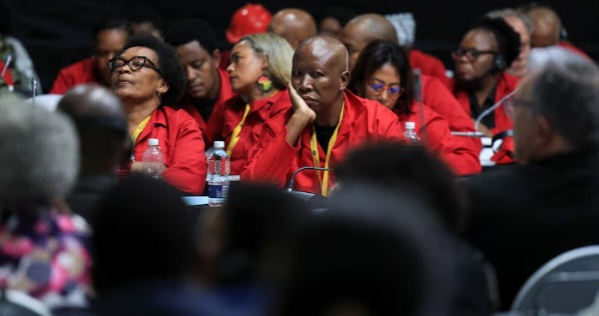
The Economic Freedom Fighters (EFF) took the South African government to court on Tuesday in a last-minute attempt to block a controversial fuel tax increase scheduled to take effect on Wednesday.
The ultra-left opposition party is seeking an urgent interdict from the Gauteng High Court to halt the implementation of a 4% increase in the General Fuel Levy, announced by Finance Minister Enoch Godongwana in his budget speech last month.
In court papers, the EFF argues that the increase is not only “unjust and regressive,” but also “constitutionally defective,” alleging that the minister failed to subject the proposal to full parliamentary scrutiny as required by law.
> “Millions of South Africans are already struggling to afford the cost of basic transportation, food, and electricity. Increasing fuel levies without a transparent and accountable process is a betrayal of the poor and working class,” said EFF spokesperson Leigh-Ann Mathys outside the courthouse.
The party contends that the fuel levy will disproportionately affect low-income households, many of whom rely on public transport whose operators are expected to pass on the cost to commuters.
The proposed increase, which would add approximately 29 cents per litre to petrol and 26 cents to diesel, is intended to raise an estimated R7.2 billion in additional revenue to help close South Africa’s growing budget deficit.

Treasury officials maintain that the increase followed the standard budgetary process and was approved by Parliament in line with the Public Finance Management Act.
But the EFF insists that there was no meaningful public consultation, and that the National Assembly failed to adequately debate the social and economic impacts of the fuel levy in a committee setting before it was passed.
The case was heard by Judge Thembeka Zondo, who reserved judgment until Wednesday morning — just hours before the tax is set to come into effect.
Should the court grant the interdict, it would be a rare legal rebuke of Treasury’s fiscal authority and could set a precedent for future budget challenges by opposition parties.
The EFF has vowed to continue opposing austerity measures and what it calls “anti-poor economic policies,” warning that further court action and street mobilisations may follow.










 News2 days ago
Outrage as mortuary attendant caught using human leg as walking stick in Benue
- News2 days ago
Edo security operative escapes from kidnapper’s den, frees 2 others
- Special Features2 days ago
7 practical ways of purifying water safely at home
- Politics1 day ago
APC support groups in Ondo reject State directive, back Tinubu ahead of 2027
- News2 days ago
APC accuses gov Adeleke of withholding LG salaries in Osun
- News2 days ago
Atiku meets Adamawa ADC stakeholders in Abuja ahead of 2027
- News2 days ago
JAMB officially releases Thursday’s UTME results, see how to check score
- Politics1 day ago
2027: ADC is only party capable to unseat Tinubu – Atiku




You must be logged in to post a comment Login