
Foreign Affairs
Ceasefire talks in Doha stall over Israeli withdrawal terms, but negotiations continue

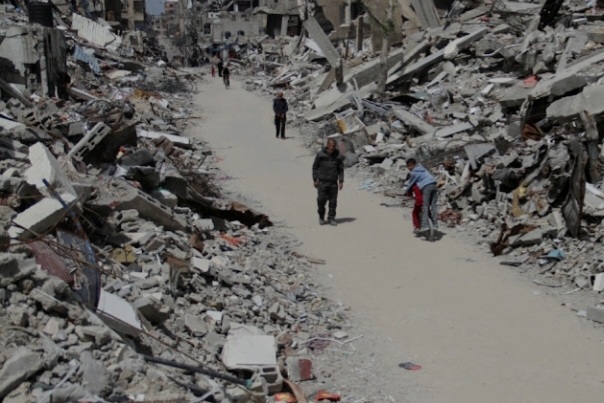
Negotiations aimed at brokering a ceasefire in the Gaza Strip have hit a significant impasse, with both Palestinian and Israeli sources citing disagreements over the scope and timeline of an Israeli military withdrawal from the war-torn enclave.
The talks, taking place in Doha under Qatari and Egyptian mediation and based on a U.S.-backed proposal for a 60-day ceasefire, are being held indirectly between Israel and Hamas representatives.
While both sides have expressed interest in continuing the process, the latest setback underscores the deep mistrust and conflicting priorities that have long plagued efforts to end the hostilities.
According to sources familiar with the closed-door negotiations, Hamas is insisting on a full and verifiable withdrawal of Israeli troops from populated areas in Gaza as a precondition for advancing to the next phase of the ceasefire agreement.
Israel, however, remains reluctant to commit to a complete pullback without guarantees on the release of hostages and the long-term dismantling of Hamas’ military infrastructure.
“The crux of the disagreement now lies in how much of Gaza the Israeli forces are expected to vacate during the initial 60-day truce,” one Palestinian official said, speaking on condition of anonymity due to the sensitivity of the talks.
“Hamas will not accept a partial withdrawal that allows Israel to maintain a presence and resume operations at will.”
An Israeli source echoed the stalemate, stating, “Israel needs assurances that any pause in fighting will not be exploited by Hamas to regroup and rearm. Withdrawal terms must reflect that reality.”
Despite the deadlock, mediators have signaled that talks will resume in the coming days, with Washington pushing both sides to maintain momentum.

U.S. officials have reportedly urged negotiators to focus on areas of consensus—such as humanitarian access and the release of women, children, and elderly hostages—as potential confidence-building measures.
The proposed 60-day ceasefire is envisioned as the first stage of a broader roadmap that could lead to a permanent cessation of hostilities, prisoner exchanges, and reconstruction efforts.
But with fighting still raging in southern and central Gaza, the urgency for a breakthrough is growing.
The war, which began in October 2023 following Hamas’ deadly cross-border attack on Israeli communities, has killed tens of thousands and displaced the vast majority of Gaza’s population.
International pressure for a ceasefire has intensified in recent weeks amid worsening humanitarian conditions and a fragile political climate across the region.
As diplomats continue to navigate the narrow path toward compromise, observers warn that failure to resolve the issue of troop withdrawal could derail hopes for even a temporary truce.
“There’s no deal unless there’s clarity on the ground,” one regional diplomat said.
“And right now, clarity is what’s missing.”





 Special Features2 days ago
Umaru Bago: The transformation leader repositioning Niger State for growth
- News1 day ago
ISWAP claims responsibility for fresh attacks on troops
- Crime Watch1 day ago
VDM: Court grants bail to crypto entrepreneur Blord, restricts travel
- News1 day ago
Gunmen kidnap passengers along Kogi highway
- News1 day ago
First UTME 2026 results drop today — JAMB confirms
- News1 day ago
Breaking…Tinubu signs 2026 budget of ₦68.32trn into law
- Special Features12 hours ago
7 practical ways of purifying water safely at home
- News2 days ago
Former Ondo gov dumps PDP








You must be logged in to post a comment Login