
Politics
I preferred Fubara’s removal, but Tinubu intervened – Wike

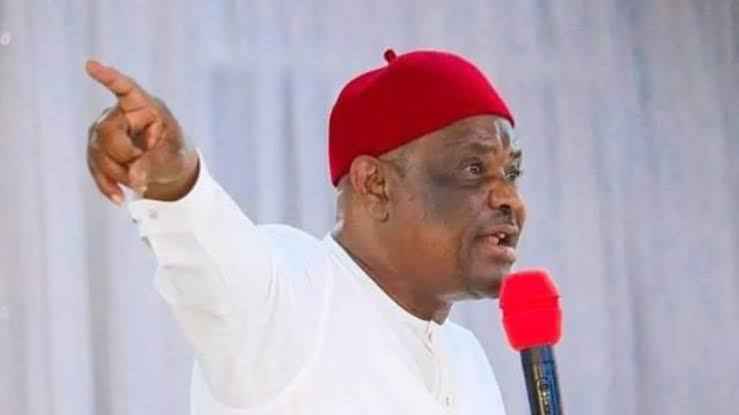
The Minister of the Federal Capital Territory (FCT), Nyesom Wike, has voiced his dissatisfaction over President Bola Tinubu’s decision to declare a state of emergency in Rivers State, revealing that he would have preferred the outright removal of Governor Siminalayi Fubara instead.
Wike, who served as the governor of Rivers State before his appointment as FCT Minister, made this known during a media interaction in Abuja on Friday.
While he acknowledged that the president’s action was likely taken in the overall interest of the state, he didn’t hide his personal discontent with the approach.
“As a politician, I am not happy with the declaration of Emergency Rule in Rivers State. I wanted the outright removal of the governor. But for the interest of the state, the president did the right thing to prevent anarchy,” Wike said.
President Tinubu had declared a state of emergency in Rivers last month, citing persistent political instability and recent security threats, including pipeline explosions.
He suspended Governor Fubara, Deputy Governor Ngozi Odu, and all members of the House of Assembly for six months. In their place, Vice Admiral Ibok-Ete Ibas was appointed as the sole administrator to oversee the state’s affairs temporarily.
The move has generated widespread national debate, with many questioning the legal and constitutional implications of the president’s action.

Wike further noted that the crisis in Rivers State is currently before the courts, but insisted on speaking his truth.
“The governor was gone. It is not my place to make it good for the governor. As a politician, my business is not to make him comfortable and that is why there is power play,” he added.
The political rift between Wike and Fubara began shortly after the latter assumed office and has since escalated into a fierce power struggle.
The conflict also destabilized the state’s House of Assembly, leading to the defection of 27 lawmakers to the All Progressives Congress (APC), and the creation of parallel legislative factions.
The ongoing crisis continues to draw national attention as stakeholders await legal resolution and possible reconciliation efforts.






 News1 day ago
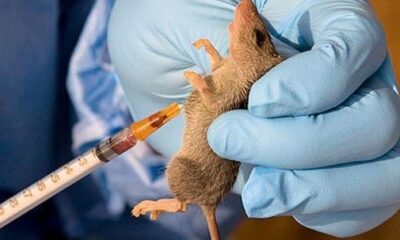
Benue intensifies disease surveillance after doctor’s Lassa Fever death
 News1 day ago
Panic in Lagos Market after suspected IED explosion injures one
- News6 hours ago
NSITF–Rand mutual partnership to boost social protection across Africa, says Faleye
- News1 day ago
Judge rejects recusal request, remands Sowore in custody
- Personalities Bios1 day ago
Meet Prof. Oluwatoyin Ogundipe, former UNILAG VC now leading NUC’s governing board
- Entertainment1 day ago
Mummy Wa explains why marriage has not happened yet
- News17 hours ago
47 hostages regain freedom as troops raid terrorist hideout
- News7 hours ago
IGP issues tough sanctions over police presence on social media








You must be logged in to post a comment Login