
News
Rivers sole administrator defends N1.48trn 2025 budget amid emergency rule

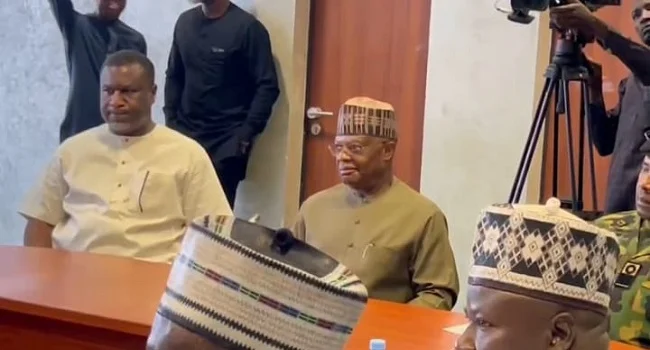
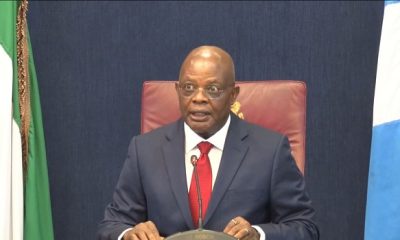
The Sole Administrator of Rivers State, Ibok-Ete Ibas, on Tuesday presented and defended the state’s ambitious ₦1.48 trillion 2025 budget before the House of Representatives, outlining a comprehensive plan to rebuild infrastructure, enhance social services, and drive inclusive development under the current state of emergency.
Speaking before the House Committee, Ibas emphasized that the proposed fiscal framework aligns with the Rivers State Development Plan (2017–2027), and is designed to address the region’s pressing needs while positioning the state for long-term stability and growth.
The budget includes ₦1.48 trillion in proposed expenditure and ₦1.4 trillion in projected revenue—figures that reflect the state’s commitment to financial discipline and strategic development, even in challenging times. The proposal received presidential approval and was transmitted to the National Assembly following a Supreme Court ruling that affirmed the legality of the 2025 appropriation process.
While outlining the state’s goals, Ibas also expressed concern over what he described as a lack of cooperation from some suspended state officials.
“We in Rivers State are most grateful for your commitment. Despite your tight schedules, you have shown unwavering resolve to fulfill your constitutional duties,” he said.
He went on to reveal that some suspended officials withheld crucial financial data, complicating efforts to accurately reflect first-quarter expenditures undertaken by the previous administration.
“Regrettably, some state officials withheld critical information required to ensure a more complete capture of expenditures already undertaken during the first quarter of the fiscal year,” he stated.
Nonetheless, he assured that the budget framework had been revised to legally ratify those expenditures while ensuring transparency and alignment with national standards.
Key budgetary allocations include,
The administrator highlighted several major allocations which includes :

₦324.5 billion for infrastructure and transportation projects; ₦55 billion to relocate and expand Rivers State University Teaching Hospital; ₦50 billion for zonal hospital upgrades; ₦38.85 billion for shoreline protection and erosion control; ₦30 billion for zonal secondary schools and ₦5.75 billion for primary school rehabilitation;₦2.5 billion for women’s economic empowerment and ₦3 billion for youth resource centers; ₦20 billion to recapitalisle Rivers State Microfinance Bank for MSME support;₦117 billion in pension, gratuities, and employee benefits.
“God willing, every Rivers citizen with a great idea, carefully thought out and well-planned, will find the funding required to turn their dreams into successful ventures—irrespective of tribe, ethnicity, or political affiliation,” Ibas declared.
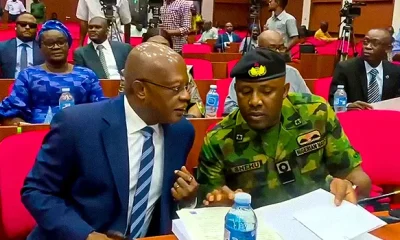
Responding to the presentation, Chairman of the House Committee on Rivers State Oversight, Hon. Julius Ihonvbere, commended the administrator for his detailed briefing and reaffirmed the committee’s commitment to supporting the peace and development efforts in the state.
“This committee is committed to working with you to restore stability, peace, growth, and development in Rivers State. Rivers has always been a shining example of what is possible with good leadership,” Ihonvbere said.
He stressed the importance of transparency and due process in reviewing the budget:
“We will scrutinize the budget. We will invite you to send your relevant officials for a proper defense. While we are committed to getting Rivers State back on track, we are not going to cut corners.”
Ihonvbere also praised the inclusion of people-centered interventions in the budget, particularly in areas such as women’s empowerment and pensions for retirees.
“These are areas that directly affect people’s lives. We know the struggles of many families, and we appreciate you for making these bold commitments,” he added.
The committee is expected to begin budget defense sessions in the coming weeks, as lawmakers continue to assess the proposal to ensure fiscal discipline, accountability, and effective implementation within the state’s emergency governance structure.




 Special Features2 days ago
Umaru Bago: The transformation leader repositioning Niger State for growth
- News1 day ago
ISWAP claims responsibility for fresh attacks on troops
- Crime Watch1 day ago
VDM: Court grants bail to crypto entrepreneur Blord, restricts travel
- News1 day ago
Gunmen kidnap passengers along Kogi highway
- News1 day ago
First UTME 2026 results drop today — JAMB confirms
- News1 day ago
Breaking…Tinubu signs 2026 budget of ₦68.32trn into law
- News2 days ago
Former Ondo gov dumps PDP
- Business1 day ago
Dangote set to sell 10% stake in $20bn refinery via Pan-African IPO








You must be logged in to post a comment Login