
News
Court orders Britain to pay £420m for 1949 Enugu coal miners’ killings

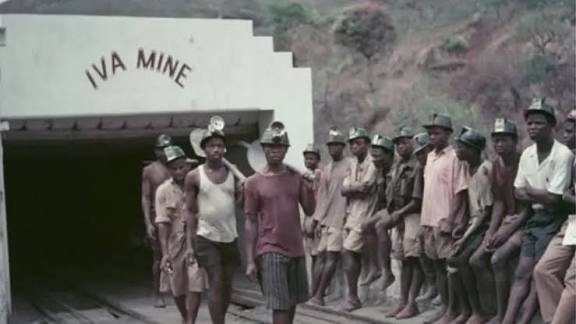
More than seven decades after one of Nigeria’s darkest colonial-era tragedies, justice may finally be catching up.
More than seven decades after one of Nigeria’s darkest colonial-era tragedies, justice may finally be catching up.
An Enugu State High Court has ordered the British government to pay £4of20 million in compensation to the families 21 Nigerian coal miners who were brutally killed at the Iva Valley Coal Mine in Enugu in 1949.
The massacre took place on November 18, 1949, at the Iva Valley Coal Mine in Enugu, which was then the administrative headquarters of the Eastern Region under British rule. The miners had been protesting poor working conditions, racial wage disparities and unpaid arrears
After their demands were reportedly ignored, the workers embarked on a go-slow protest and occupied the mine to stop a planned lockout. During the protest, a British superintendent allegedly ordered colonial police to open fire on the unarmed workers, killing 21 miners and injuring 51 others.
The victims were identified as Sunday Anyasodo, Ani Oha, Andrew J. Obiekwe Okonkwo, Augustine Chiwetalu, Onoh Ugwu, Ngwu Offor, Ndunguba Eze, Okafor Agu, Livinus Ukachunwa, Jonathan Agu Ozoani, Moses Ikegbu Okoloha, Chukwu Ugwu, Thomas Chukwu, Simon Nwachukwu, Agu Alo, Ogbonnia Ani Chima, Nnaji Nwachukwu, William Nwaku, James Onoh Ekeowa, Felix Nnaji and Ani Nwaekwe.
The suit, marked E/909/2024, was instituted by human rights activist, Mazi Greg Onoh, who asked the court to compel the British Government to accept responsibility for the massacre, issue a formal apology and pay adequate compensation to the victims’ families.
Those listed as respondents were the Secretary of State for Foreign, Commonwealth and Development Affairs, the British Government, the Federal Government of Nigeria, the Attorney-General of the Federation, and the Head of the Commonwealth Government of the United Kingdom.
At the hearing, no legal representation appeared for the British Government and some other foreign respondents..
In his ruling, Justice Onovo dismissed claims of sovereign immunity and held that Nigerian courts have the authority to hear cases involving grave historical human rights abuses.
“These defenseless coal miners were asking for improved work conditions. They were not embarking on any violent action against the authorities, yet they were shot and killed,” the judge said.

He further ordered the British Government to issue unreserved written apologies to the victims’ families through their counsel. The apologies are to be published in Nigeria’s Daily Sun, Daily Independent and The Punch newspapers, as well as in three major national newspapers in the United Kingdom.
Proof of publication must be filed in court within 60 days, while the compensation must be fully paid within 90 days of the judgment.
Justice Onovo also held that the Federal Government of Nigeria and the Attorney-General of the Federation failed in their constitutional duty to seek justice for the victims, describing their decades of inaction as a dereliction of responsibility.
He ordered the Nigerian government to begin diplomatic engagement with the British Government within 60 days to ensure enforcement of the judgment and payment of the reparations.
“The argument that Nigeria was under colonial rule when the killings were committed is hereby struck out,” the judge ruled.
Reacting to the decision, counsel to the applicants, Prof. Yemi Akinseye-George, SAN, and P.N. Agazie, described the ruling as historic and far-reaching.
They said the judgment sends a strong signal that governments must be held accountable for human rights violations, regardless of when they occurred.
“This ruling represents a significant milestone in the pursuit of historical accountability and justice for colonial-era violations,” Akinseye-George said. “It affirms that the right to life transcends time, borders and changes in sovereignty.”
The lawyers added that the court drew persuasive parallels with international precedents, including compensation paid by the United Kingdom to victims of abuses during the Mau Mau uprising in Kenya, stressing the continuing duty of states to provide redress for serious human rights violations.

 News2 days ago
NDC chieftain Omo-Agege says he supports Obi but still endorses Tinubu reforms
- Crime Watch2 days ago
Police recover bodies of two kidnap victims, arrest suspect in Edo
- News2 days ago
Daily Times Publisher pledges N100m support for NUJ FCT Multipurpose hall project
- News2 days ago
Jigawa Assembly suspend council speaker over alleged APC anti-party activity
- News18 hours ago
NSITF prioritising AI impact on gig workers, platform economy – Faleye
- News2 days ago
Gunmen storm Kogi community, abduct woman, toddler in fresh attack
- News2 days ago
Gunmen abduct Adelabu’s sister, children in Ibadan
- News2 days ago
4 NYSC members, soldier burnt to death in Adamawa road accident








You must be logged in to post a comment Login