
News
EFCC recovers N500bn, secures 7,000 convictions in 2 years – Tinubu

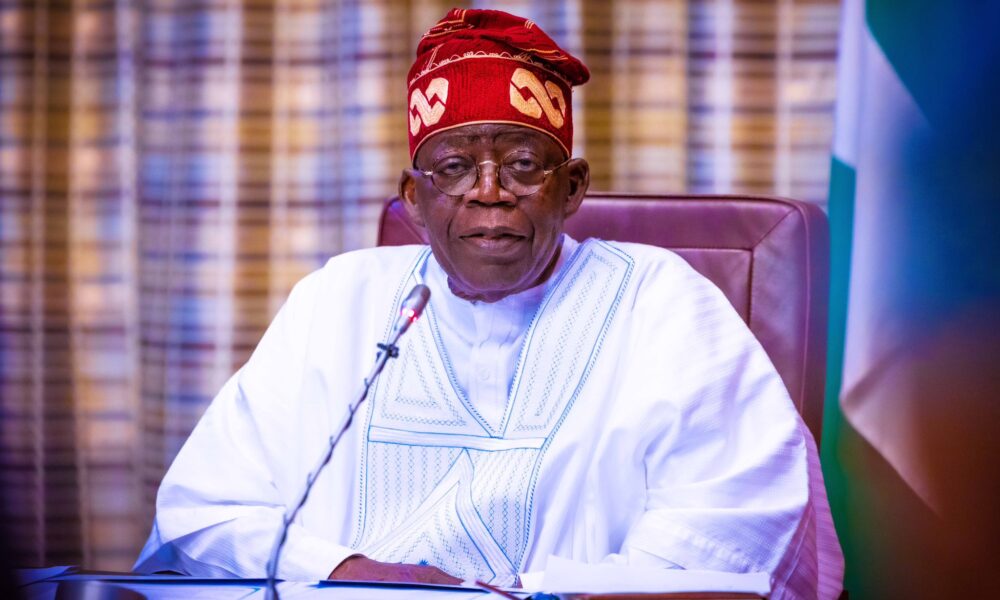
President Bola Ahmed Tinubu has lauded the Economic and Financial Crimes Commission (EFCC) for its exceptional performance in asset recovery and securing convictions under the leadership of Ola Olukoyede, describing the achievements as a testament to renewed institutional independence and strengthened accountability.
The commendation came on Monday during the 7th EFCC-NJI Capacity Building Workshop for Justices and Judges at the National Judicial Institute (NJI) in Abuja. President Tinubu was represented at the event by Vice President Kashim Shettima.
Highlighting the agency’s accomplishments, Tinubu revealed that in the first two years of his administration, the EFCC had recorded over 7,000 convictions and recovered assets worth more than ₦500 billion, marking one of the most productive periods in the commission’s history.
“As an administration, we have prioritised public accountability by strengthening anti-corruption agencies and granting them the independence to execute their statutory mandates,” he stated.
“The EFCC, for example, has recorded over 7,000 convictions in the first two years of this administration and recovered assets in excess of ₦500 billion,” he said.
The President noted that proceeds of recovered assets had been channelled back into the economy to fund key social programmes such as the Students Loan Scheme and the Consumer Credit Initiative.
He urged judges to give their utmost in the fight against corruption, saying the judiciary remains the backbone of justice and accountability.
“We have an opportunity to consolidate the efforts of the last two years to deliver an optimal anti-corruption framework that will support our peaceful growth and development. A Nigeria free of corruption is possible if we all commit to doing what is right and ensuring that those who deviate from the norm are not allowed to go scot-free,” Tinubu said.
He added that the government had allowed both the judiciary and anti-graft agencies to “exercise their constitutional and statutory powers to dispense justice and restore sanity.”
“Except the society has full confidence that those who pillage our resources will be subjected to the rule of law and brought to justice through a fair and transparent process, the sneers over our collective commitment to fighting corruption will only get louder,” the President warned.
In his address, EFCC Chairman Ola Olukoyede acknowledged the progress made but lamented persistent judicial bottlenecks that slow the pace of high-profile corruption cases.

“The milestones we have recorded in the past two years are almost overshadowed by public concern over the progress of high-profile cases in court,” Olukoyede said.
“Some cases filed by the Commission 15 or 20 years ago appear in limbo, moving in circles. The longer cases last in court, the more the image of the court as the temple of justice is eroded. The only victor in the circumstance is corruption.”
He criticised what he called the “weaponisation of procedure” and warned that the prioritisation of technicalities over justice undermines public confidence.
“When cases drag in court, witnesses die, memories fade, and public interest wanes. Prioritising procedural technicalities at the expense of justice undermines our collective efforts,” he stressed.
Chief Justice of Nigeria, Justice Kudirat Kekere-Ekun, in her remarks, said the judiciary has a “decisive and delicate” role in ensuring that corruption does not cripple national development.
“Economic and financial crimes have grown in scale, sophistication, and audacity,” she observed.
“They rob citizens of schools, hospitals, and roads, striking at the very root of good governance and social equity. Each ruling or judgment carries implications that either strengthen or weaken public faith in the rule of law.”
Also speaking, Attorney-General of the Federation and Minister of Justice, Lateef Fagbemi (SAN), called for synergy between investigators, prosecutors, and judges to ensure swift and effective justice.
“The fight against economic and financial crimes is not just a legal battle—it is a moral duty and a civic responsibility. When corruption thrives, justice withers,” he said.
The workshop, themed “Enhancing Justice in the Fight against Economic and Financial Crimes,” continues until Wednesday, October 22, 2025.








 News2 days ago
ISWAP claims responsibility for fresh attacks on troops
- Special Features21 hours ago
7 practical ways of purifying water safely at home
- Crime Watch2 days ago
VDM: Court grants bail to crypto entrepreneur Blord, restricts travel
- News2 days ago
Gunmen kidnap passengers along Kogi highway
- News2 days ago
Breaking…Tinubu signs 2026 budget of ₦68.32trn into law
- News2 days ago
First UTME 2026 results drop today — JAMB confirms
- News18 hours ago
APC accuses gov Adeleke of withholding LG salaries in Osun
- Business2 days ago
Dangote set to sell 10% stake in $20bn refinery via Pan-African IPO






You must be logged in to post a comment Login