
Foreign Affairs
Putin signals openness to direct talks with Zelensky amid civilian targeting concerns


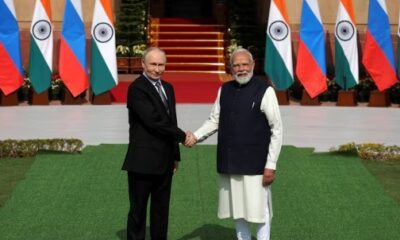
Russian President Vladimir Putin has signalled for the first time since the early stages of the war that he is open to direct bilateral talks with Ukrainian President Volodymyr Zelensky, raising cautious hopes for renewed diplomatic engagement more than three years after Russia launched its full-scale invasion.
In an interview with Russian state television on Monday, Putin said that Russia has “always looked positively on any peace initiatives,” adding, “We hope that representatives of the Kyiv regime will feel the same way.”
The remarks were followed by clarifications from Kremlin spokesperson Dmitry Peskov, who told Interfax news agency that Putin’s comments indicated a readiness to hold discussions specifically aimed at preventing attacks on civilian targets.
“When the president said that it was possible to discuss the issue of not striking civilian targets, including bilaterally, the president had in mind negotiations and discussions with the Ukrainian side,” Peskov said.
While President Zelensky did not address Putin’s remarks directly, he acknowledged the broader issue in his nightly video address, stating that Ukraine was “ready for any conversation” that would protect the civilian population. He added that Kyiv is seeking a “clear answer from Moscow” on whether it would commit to halting strikes on civilian infrastructure.

The comments mark the first public signal from the Kremlin since February 2022 that direct, leader-level negotiations with Ukraine might be possible. Previous rounds of talks between Moscow and Kyiv collapsed in the early months of the war, amid mutual accusations of bad faith and ongoing military escalation.
The renewed talk of diplomacy comes as international pressure mounts for both sides to reduce civilian casualties, especially following a spate of deadly strikes in recent weeks on energy facilities and residential areas across Ukraine.
Analysts warn, however, that the path to meaningful talks remains fraught. “This could be a rhetorical softening, not a policy shift,” said Anna Lebedeva, a Moscow-based political analyst. “But the mention of bilateral talks—rather than mediated summits—suggests the Kremlin may be testing the waters for a new diplomatic approach.”
There has been no indication yet from NATO allies or major international mediators about any behind-the-scenes movement toward restarting formal negotiations.
For now, both sides appear to be positioning themselves publicly—Ukraine demanding a firm Russian commitment to protecting civilians, and Russia suggesting it is willing to talk, if only on limited terms.









 News2 days ago
Bandits murder 17 in Sokoto community attack
- Personalities Bios2 days ago
Who is Oghale Joseph? New CEO of PZ Cussons Nigeria
- News2 days ago
Kidnapped Kaduna schoolchildren, driver regain freedom after 36 days in captivity
- Crime Watch2 days ago
Court sentences 5 men to death for armed robbery, conspiracy
- News2 days ago
Nollywood Veteran actor, Janmole passes away
- News2 days ago
2 policemen killed as gunmen attack Soludo’s Chief of Staff convoy
- News2 days ago
I didn’t join APC because of Akwa Ibom deep seaport – Gov Eno
- News2 days ago
PSC denies viral police recruitment shortlist, says it’s fake











You must be logged in to post a comment Login