
Special Features
All you need to know about GDP rebasing and why it matters

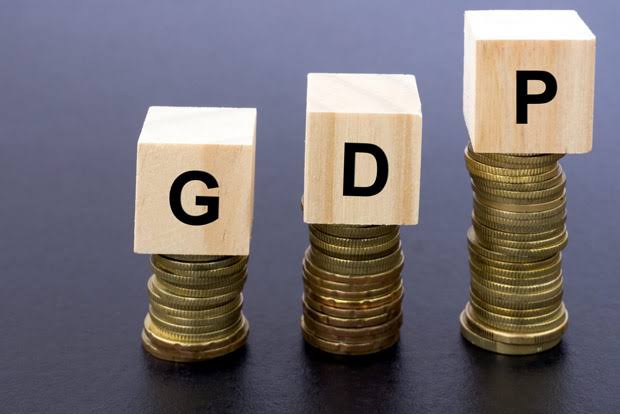
Eleven years after its last review, the National Bureau of Statistics (NBS) has updated Nigeria’s method of calculating Gross Domestic Product (GDP), resulting in a new figure of ₦372.82 trillion.
This rebasing exercise, announced in October 2024 and implemented in January 2025, brings significant updates by capturing emerging sectors such as digital services, modular refineries, social insurance, and other previously unaccounted-for economic activities.
But what exactly is GDP rebasing, and why is this update important for Nigeria’s economy? Below is a comprehensive breakdown of everything you need to know.
What is GDP and why does it matter?
GDP, or Gross Domestic Product, represents the total value of all goods and services produced within a country over a specific period, typically a quarter or a year.
It’s one of the most important indicators for assessing a nation’s economic health.
When GDP rises, it generally signifies that the economy is growing, businesses are producing more, and employment opportunities are increasing.
A declining GDP, on the other hand, may signal economic trouble, reduced output, or recession.
What is GDP rebasing?
GDP rebasing means changing the base year used to calculate national output, so that it reflects the current structure of the economy.
The base year serves as a benchmark for comparison, and it should be regularly updated to capture shifts in production, consumption, and emerging sectors.
Nigeria last carried out this process in 2014, using 2010 as the reference year. Since then, the economy has evolved dramatically.
From a booming tech industry and rising digital service providers to growth in informal trade, pension schemes, and modular refining, the economic landscape looks very different today.
By updating the base year, the NBS ensures that GDP data now include previously overlooked or underreported sectors.
Why GDP rebasing is necessary
Globally, rebasing is standard practice and is typically done every 5 to 10 years. Failing to rebase GDP in a timely manner can result in outdated figures that mislead both local policymakers and international investors.
For Nigeria, the latest rebasing was essential for several reasons:

- It improves the accuracy of national economic data.
- It enables better policy design and budget planning.
- It helps identify new growth sectors.
- It offers a clearer view of economic development and structural change.
What’s new in Nigeria’s economic sphere
Thanks to the 2025 rebasing, Nigeria’s GDP now incorporates a wider range of economic activities that were previously missing or insufficiently measured. Key additions include:
- Modular refineries (small-scale petroleum processing facilities)
- Digital technology and service platforms
- Pension fund administration
- Contributions from social insurance schemes like NSITF and NHIS
- Quarrying activities beyond crude oil and natural gas
- Informal sector businesses, which make up a substantial part of Nigeria’s economy
- Households acting as employers, such as domestic staffing
These adjustments significantly boosted the GDP figure, offering a more comprehensive view of Nigeria’s productive capacity.
How GDP rebasing benefits the economy
For multiple sectors of society, this update has far-reaching implications:
For businesses and investors: The data reveals untapped opportunities and helps direct investment into high-growth areas like tech and services.
For government and policymakers: It enables more targeted tax policies, effective resource allocation, and strategic economic planning.
For analysts and economists: It improves macroeconomic modelling and forecasting, allowing for better insights into growth patterns.
Does GDP rebasing affect inflation?
One common misconception is that GDP rebasing affects prices of goods or leads to inflation. This is not true.
Rebasing is purely statistical. It doesn’t increase your grocery bill or change fuel prices.
What it does is provide a more accurate foundation for interpreting economic changes, including inflation, employment, and sectoral performance.
An inclusive and data-driven process
The NBS didn’t carry out this update in isolation. The rebasing process was inclusive and drew on data from multiple institutions and regulatory bodies, including:
- Central Bank of Nigeria (CBN)
- Nigerian National Petroleum Company (NNPC) Ltd
- Federal Inland Revenue Service (FIRS)
- Nigerian Communications Commission (NCC)
- Securities and Exchange Commission (SEC)
This collaborative approach helped ensure transparency, data integrity, and alignment across sectors.
What the rebased GDP means for Nigeria
The rebased GDP doesn’t magically solve Nigeria’s economic challenges, but it does offer a better lens for diagnosing and addressing them.
With more realistic data at its disposal, the country can now:
- Improve national planning
- Strengthen investor confidence
- Benchmark itself more accurately on the global economic stage
In essence, this rebasing exercise acts as a much-needed reality check—reflecting the economy as it truly is, not as it once was.


 News1 day ago
NSITF prioritising AI impact on gig workers, platform economy – Faleye
- Personalities Bios2 days ago
Who is Damilola Sonayon-James? The sustainability expert poised for Lagos deputy governorship
- News1 day ago
Atiku’s spokesman urges DSS to question Sunday Igboho over Oyo kidnapping claims
- Entertainment1 day ago
Why I struggles to commit to one woman – Flavour explains
- News1 day ago
Senate receives Tinubu’s nomination of Zainab Marwa for NDDC board seat
- News1 day ago
Gumen shoot Accord Party chairman in Osogbo
- News1 day ago
Rivers United players escape injury as team bus crashes en route to federation cup clash
- Crime Watch24 hours ago
Police arrest man over viral AI-generated voice impersonating Tinubu















You must be logged in to post a comment Login