
Special Features
Ghana, Morocco, 8 other African countries with least oil reserves

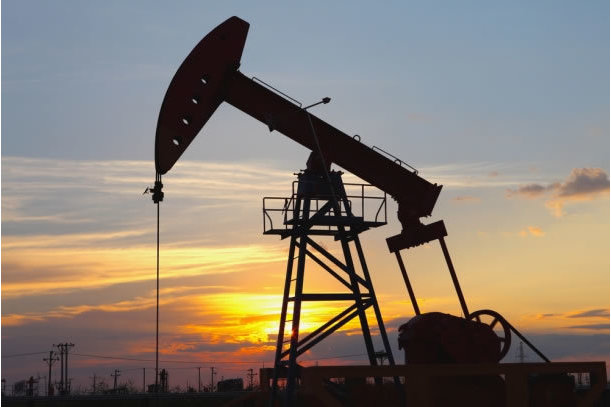
Africa’s oil wealth is far from evenly distributed. While a few countries such as Nigeria, Libya and Angola control the bulk of the continent’s crude reserves, many others have only tiny volumes that barely influence their economies.
For these countries, oil is often overshadowed by agriculture, mining, services or renewable energy, and most still rely heavily on imports to meet local fuel needs.
Below is a detailed look at the 10 African countries with the smallest proven oil reserves.
1. Morocco – 684,000 barrels (94th globally)
Morocco’s oil reserves are extremely small and have little impact on the country’s economy.
As a result, Morocco depends largely on imported crude to power its industries and transport sector.
Rather than chasing oil, the country has focused strongly on renewable energy, investing heavily in solar and wind projects that now place it among Africa’s leaders in clean energy development.
2. Ethiopia – 428,000 barrels (95th globally)
Ethiopia has one of the smallest proven oil reserves on the continent, despite being one of Africa’s fastest-growing economies.
The limited availability of crude means oil production does not play any meaningful role in government revenue.
To meet domestic demand, Ethiopia relies almost entirely on imported petroleum products, while focusing more on hydropower and other non-oil sectors for growth.
3. South Africa – 15 million barrels (83rd globally)
Although South Africa is Africa’s most industrialised economy, it has very limited crude oil reserves.
Local production is too small to support its large energy needs, forcing the country to depend heavily on imports to supply refineries and fuel consumers.
As a result, energy security remains a major policy concern, with growing attention on gas and renewable alternatives.
4. Benin – 8 million barrels (90th globally)
Benin’s proven oil reserves are small and mostly offshore, contributing only marginally to national income.
Oil does not play a central role in the economy, which is driven more by trade, port activities and services linked to neighbouring countries.
The limited size of its reserves has kept Benin from developing a strong oil-export industry.
5. Mauritania – 20 million barrels (80th globally)
Mauritania has carried out oil exploration for years, but its proven reserves remain modest.

While there has been some production, the volumes are too small to significantly transform the economy or public finances.
The country’s economic future is still more closely tied to mining, fisheries and, increasingly, natural gas rather than crude oil.
6. Niger – 150 million barrels (58th globally)
Niger is a relatively small oil producer compared to Africa’s major exporters. Although production has increased in recent years, the country’s reserves remain limited in size.
Oil provides some revenue and export earnings, but it is not large enough to dominate the economy, which still depends heavily on agriculture and foreign support.
7. Democratic Republic of Congo – 180 million barrels (55th globally)
In the DRC, oil plays only a minor role in the national economy. The country’s crude reserves are small when compared to its vast mineral wealth.
Copper, cobalt and other minerals far outweigh oil in terms of export value, investment and government income, leaving petroleum as a secondary resource.
8. Cameroon – 200 million barrels (52nd globally)
Cameroon was once a more significant oil producer, but many of its oil fields are now old and in decline.
With limited proven reserves and aging infrastructure, oil’s contribution to national revenue has fallen over time.
The country continues to explore alternatives, including agriculture, gas and other sectors, to support economic stability.
9. Tunisia – 425 million barrels (47th globally)
Tunisia’s oil sector is constrained by relatively small reserves and falling production levels.
As domestic output declines, the country has become more dependent on imported energy to meet local demand.
This has increased pressure on public finances and strengthened calls for reforms and investment in renewable energy sources.
10. Ghana – 660 million barrels (40th globally)
Ghana is one of West Africa’s newer oil producers, but its proven reserves remain modest by global standards.
While oil has boosted government revenue and exports since production began, the limited size of the reserves has highlighted the importance of diversifying the economy.
Agriculture, services and manufacturing continue to play a crucial role alongside petroleum.


 News2 days ago
NDC chieftain Omo-Agege says he supports Obi but still endorses Tinubu reforms
- Crime Watch2 days ago
Police recover bodies of two kidnap victims, arrest suspect in Edo
- News2 days ago
Daily Times Publisher pledges N100m support for NUJ FCT Multipurpose hall project
- News2 days ago
Jigawa Assembly suspend council speaker over alleged APC anti-party activity
- News19 hours ago
NSITF prioritising AI impact on gig workers, platform economy – Faleye
- News2 days ago
Gunmen storm Kogi community, abduct woman, toddler in fresh attack
- News2 days ago
Gunmen abduct Adelabu’s sister, children in Ibadan
- News2 days ago
4 NYSC members, soldier burnt to death in Adamawa road accident









You must be logged in to post a comment Login