
News
FG, NDLEA to introduce mandatory drug tests for tertiary institution students from September

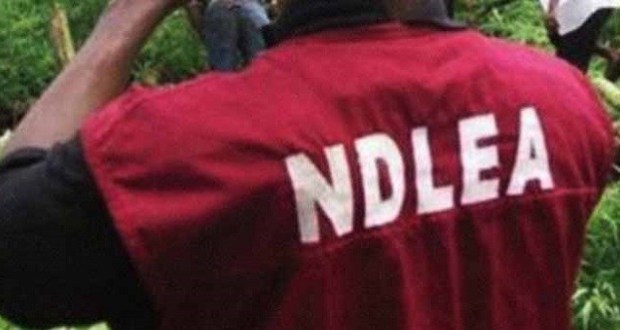
In a bold move to combat rising drug abuse among youths, the Federal Government, in collaboration with the National Drug Law Enforcement Agency (NDLEA), is set to implement mandatory drug testing for students in tertiary institutions beginning with the 2025/2026 academic session in September.
A senior NDLEA official, who spoke on condition of anonymity, disclosed that a technical working group comprising officials from the agency and the Federal Ministry of Education has been established to finalize the testing framework and operational guidelines.
The planned rollout marks a significant shift in Nigeria’s drug policy, targeting prevention and early intervention among young people. The initiative aims to not only identify students struggling with substance abuse but also to link them to counseling and rehabilitation services.
Education Minister Dr. Tunji Alausa recently threw his weight behind the policy during a meeting in Abuja with NDLEA Chairman Brig. Gen. Buba Marwa (retd.), where both men discussed strategies to curb substance abuse on campuses.
Marwa emphasised the threat posed by drug use, saying, “We are fighting for the souls of our children. Without drugs, many criminal activities would not be possible.”
The minister also stressed the long-term impact of drug use on students, adding, “Their ability to make informed decisions in the latter part of their life becomes significantly reduced. So, they become unemployable. And what happens? You now have that vicious cycle. They’re not functional.”
Alausa confirmed that drug testing would cover both fresh and returning students. “You also said something very important about the drug test policy in tertiary institutions. We will do it. We have to do it. We do not have a choice. At least, we’ll start with tertiary institutions, for their fresh and returning students as well as random testing,” he stated.
The NDLEA official explained that while modalities are still being worked out, the tests could be integrated into existing medical screenings in schools. “Those already doing it, it’s already included in the medical fees in those schools… For us, for example, I think it’s just about N5,000. For people already implementing it, it’s part of their medical billing,” he said.
According to him, the tests are simple urine-based screenings that can be done in school clinics or NDLEA facilities. “The test kits have been designed in a way that even individuals — even parents — can use them at home… It’s something you can apply yourself. There’s no big deal,” he added.
Although NDLEA spokesman Femi Babafemi declined to confirm the commencement date, he urged students to see the policy as a health measure rather than a punishment. “It’s a medical process; it’s not punitive. Nobody will be punished for it. It’s a public health measure. The purpose is early detection… It also reinforces deterrence. When people know they will be tested, they are more likely to abstain,” he said.

Babafemi noted that similar drug testing policies are in place in the Police Service Commission, the military, and even the NDLEA itself. “This is just one more test. It’s in the interest of the people more than anyone else,” he said.
Opposition from ASUU, Vice ChancellorsNot everyone is convinced about the new policy. Academic Staff Union of Universities (ASUU) National President Dr. Chris Piwuna, a psychiatrist, criticised the move as ineffective and unsustainable.
“This decision or the policy direction on mandatory drug tests for students is not supported by scientific evidence. It won’t change the prevalence of substance use. The students are not the enemy. Let’s reach out with science, not suspicion,” Piwuna said.
He warned that compulsory testing could push students to conceal substance use, making it harder to reach those who need help. “What they would just need to do is abstain for two or three days, and the substances clear out of the body. So, when they come for the test, nothing will be found; as such, we will miss those we could have helped.”
Piwuna urged the government to prioritise advocacy and counselling over enforcement. “They should redirect that money towards advocacy programmes. Encourage students to join substance abuse clubs; support students with counselling centres, not scare them away with tests,” he added.
Similarly, the Committee of Vice Chancellors’ Secretary, Prof. Andrew Haruna, questioned the practicality of implementing the tests in underfunded schools.
“We should not start a policy we cannot execute. The environment in which students live is not conducive. Some hostels meant for two students now house 10. That’s a ghetto,” Haruna said.
He noted that poor living conditions and financial hardship often drive drug use among students. “Some students use drugs not because they want to, but to forget the problems they face. Fix the environment first. Let us not politicise or oversimplify a serious public health issue. We need to think deeper and plan better.”
Haruna also raised concerns about staffing and sustainability. “Do we even have enough medical staff in our schools to carry out the tests, or handle follow-up care? Even now, nurses are on strike,” he said.
Calling for a research-based approach, he urged the government to address systemic issues. “Let them make public institutions places of pride again… Fix the causes, not just the symptoms,” he said.



 Crime Watch18 hours ago
Police recover bodies of two kidnap victims, arrest suspect in Edo
- News18 hours ago
Jigawa Assembly suspend council speaker over alleged APC anti-party activity
- News1 day ago
Julius Berger completes Bodo-Bonny road
- News18 hours ago
Daily Times Publisher pledges N100m support for NUJ FCT Multipurpose hall project
- News17 hours ago
NDC chieftain Omo-Agege says he supports Obi but still endorses Tinubu reforms
- Personalities Bios1 day ago
Bart O. Nnaji: A trailblazer in engineering, technology, and national development
- News18 hours ago
Gunmen abduct Adelabu’s sister, children in Ibadan
- News1 day ago
Tinubu returns to Abuja after Lagos political tour, Eid celebrations








You must be logged in to post a comment Login