
Personalities Bios
10 key facts about late former President Muhammadu Buhari

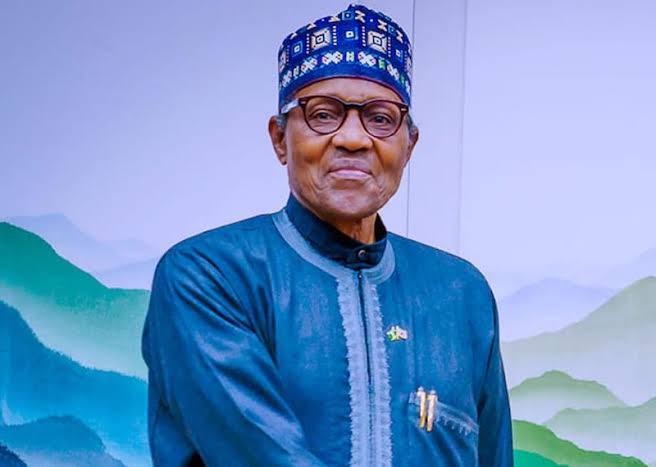
Muhammadu Buhari, one of Nigeria’s most prominent and polarizing leaders, passed away on July 13, 2025, at a hospital in London following a prolonged illness.
His death marked the end of an era in Nigeria’s leadership history, where he played a central role in shaping military and civilian governance for over 50 years.
From leading the country as a military ruler in the 1980s to becoming a democratically elected president decades later, Buhari’s legacy is deeply embedded in Nigeria’s political and historical fabric.
Here are ten notable facts about the late former President:
1. Early life in Daura, Katsina State
Born on December 17, 1942, in the northern town of Daura, Katsina State, Muhammadu Buhari was the 23rd child of his father, Mallam Hardo Adamu, a Fulani chief.
Raised in a deeply religious Muslim household, Buhari’s early values were shaped by Islamic teachings and a conservative upbringing, which later influenced his leadership style.
2. Accomplished military officer
Buhari enlisted in the Nigerian Army in 1961 and trained at top institutions including the Nigerian Military Training College, Mons Officer Cadet School in the UK, and India’s Defence Services Staff College.
He served during the Nigerian Civil War and earned a reputation for integrity and discipline, ascending steadily in rank.
3. Head of State after 1983 Coup
On December 31, 1983, Buhari seized power in a military coup that removed President Shehu Shagari.
As Head of State (1983–1985), he launched the War Against Indiscipline (WAI) to combat corruption and societal decay.
His tenure was marked by strict order but also drew criticism for harsh crackdowns and economic missteps. His regime ended when General Ibrahim Babangida ousted him in another coup.
4. Persistent Presidential candidate
After leaving military service, Buhari turned to politics. He ran for president in 2003, 2007, and 2011 without success.
In 2015, he finally won under the All Progressives Congress (APC), defeating incumbent President Goodluck Jonathan, a first in Nigeria’s democratic history. He secured re-election in 2019, defeating Atiku Abubakar of the PDP.
5. Governance focused on corruption, security, and infrastructure
Buhari’s administration emphasized fighting corruption, battling insecurity—especially against Boko Haram—and rebuilding critical infrastructure.

While his anti-corruption efforts led to major arrests and asset recoveries, insecurity persisted.
His economic policies saw mixed results amid inflation, recession, and rising debt, though infrastructure projects in rail and agriculture were expanded.
6. Criticism over human rights and freedoms
Buhari’s leadership style came under fire for suppressing dissent and curbing press freedoms.
Critics cited arbitrary detentions, security force abuses, and a clampdown on protests like #EndSARS in 2020.
The Lekki Toll Gate incident, where security forces reportedly shot unarmed demonstrators, became a global controversy.
7. Admired for personal integrity
Despite controversies surrounding his administration, Buhari was widely perceived as personally incorruptible and modest.
He publicly declared his assets in 2015, reinforcing his image as a transparent leader. Even his fiercest critics often acknowledged his reputation for personal discipline and integrity.
8. Frequent medical trips abroad
Buhari’s frequent and extended medical visits to the UK—especially between 2017 and 2019—sparked concerns about his health and Nigeria’s ailing healthcare sector.
His long absences created governance gaps and fueled speculation about his capacity to lead during key national challenges.
9. Family life
He was married to Aisha Buhari, who served as First Lady from 2015 to 2023. Aisha was known for speaking out against perceived misgovernance and political interference.
They had five children together. Buhari’s first marriage was to Safinatu Yusuf, with whom he also had five children, before their divorce in 1988.
10. Influence beyond office
Even after leaving office in 2023, Buhari retained significant influence, especially in Northern Nigeria and within the APC.
While he stayed out of daily political affairs, his opinions and legacy continued to shape national discourse, making him one of Nigeria’s most enduring political figures.

 News2 days ago
Radda pays tribute to Buhari, Yar’Adua, Shehu Yar’Adua on Democracy Day
- News2 days ago
Federal High Court announces 2026 annual vacation, names vacation judges
- Personalities Bios2 days ago
10 things to know about Sheikh Muhammad Bashir Dasuki, new chief Imam of Ilorin
- Personalities Bios2 days ago
From shell veteran to Seplat CEO: The journey of Effiong Okon
- News15 hours ago
Odita, Aleke, others elected as new DECAN executives
- National News23 hours ago
Full Text of Tinubu’s Democracy Day address to Nigerians






You must be logged in to post a comment Login