
News
FG pushes methanol fuel as key to Nigeria’s sustainable development

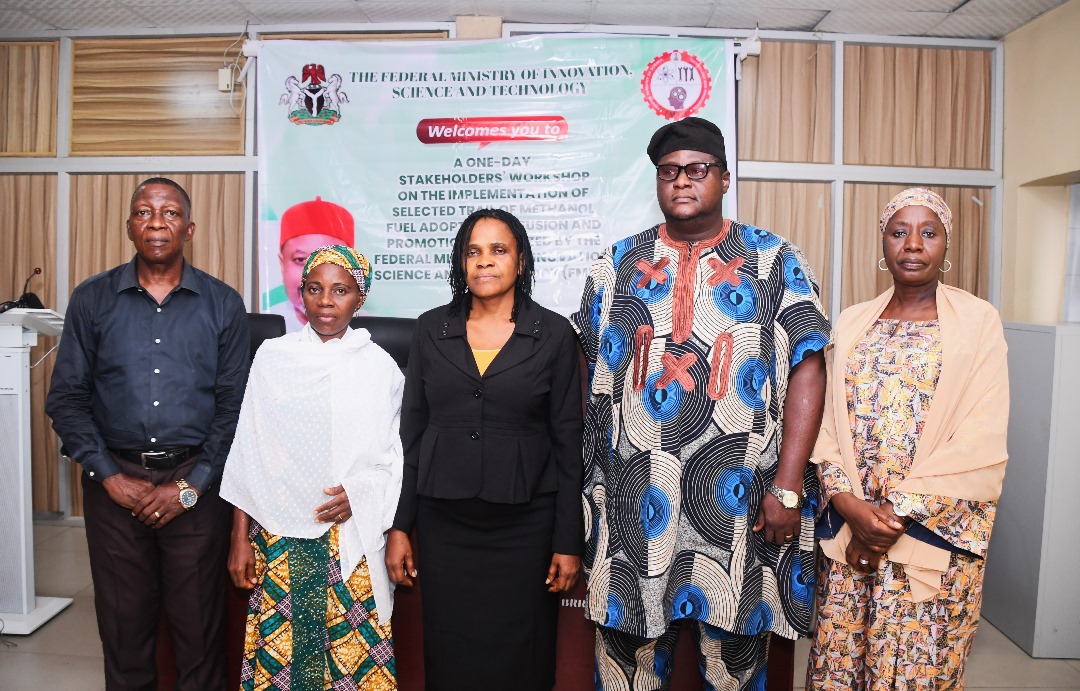
The Federal Ministry of Innovation, Science and Technology has reaffirmed the government’s commitment to exploring methanol fuel as a game-changer in Nigeria’s quest for sustainable development.
Speaking during a Stakeholders’ Workshop in Abuja, the ministry’s Permanent Secretary, Esuabana Asanye, emphasized that methanol offers immense transformative potential as an alternative energy source. The event focused on the implementation of selected trials for methanol fuel adoption, diffusion, and promotion across the country.
Asanye stated that harnessing methanol fuel aligns with Nigeria’s broader goals of innovation, energy security, and environmental sustainability.
Represented by the Director, Environmental Science Technology (EST), the permanent secretary in a statement said that methanol fuel technology value chain has been identified to have prospects of improving and positively promoting the use of clean transportation option, reduce greenhouse emission that will prioritize climate change mitigation and enhance socio-economic development in Nigeria.

She noted that the success of the zonal trials would not only necessitate a potential national roll-out, but will position Nigeria as a leading voice in the development and deployment of methanol fuel production in the African continent.
Asanye also disclosed that the Ministry is working assiduously with other Ministries and Agencies to support the national polices on methanol fuel production which will help create jobs for Nigerian youths and reduce poverty to the barest minimum.
She explained that the Ministry will continue to work with stakeholders to complete the components associated with the project in the coming years in order to partake in evidence based information which will be presented to the federal executive council for executive decision to move the country towards a methanol driven economy.
And reiterated that Nigerian Nationally Determined Contributions (NDCs) under the Paris agreement, identified energy, oil and gas, transportation, industries and Agricultures as priority sectors for climate mitigation,adding that the Nigerian’s reserved NDCs submitted in 2021, aims for 47% reduction in emissions by 2030.





 Crime Watch18 hours ago
Police recover bodies of two kidnap victims, arrest suspect in Edo
- News17 hours ago
Jigawa Assembly suspend council speaker over alleged APC anti-party activity
- News1 day ago
Julius Berger completes Bodo-Bonny road
- News18 hours ago
Daily Times Publisher pledges N100m support for NUJ FCT Multipurpose hall project
- News17 hours ago
NDC chieftain Omo-Agege says he supports Obi but still endorses Tinubu reforms
- Personalities Bios1 day ago
Bart O. Nnaji: A trailblazer in engineering, technology, and national development
- News18 hours ago
Gunmen abduct Adelabu’s sister, children in Ibadan
- News1 day ago
Tinubu returns to Abuja after Lagos political tour, Eid celebrations










You must be logged in to post a comment Login