
Foreign Affairs
Vote counting under way in Cameroon’s presidential election as Paul Biya seeks eighth term


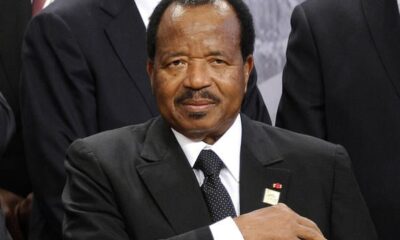
Vote counting is under way in Cameroon following Sunday’s presidential election, where 92-year-old President Paul Biya, the world’s oldest head of state, is seeking to extend his 43-year rule.
Biya, who has governed the Central African nation since 1982, is facing nine challengers in the tightly controlled poll. If re-elected, he will serve an eighth consecutive term, extending his mandate until 2032.
Interior Minister Paul Atanga Nji described the voting process as “hitch-free” across much of the country. However, reports from several regions painted a more complex picture.
In the English-speaking western regions, where separatist groups have long opposed Yaoundé’s authority, calls for an election boycott led to low turnout and isolated incidents of violence.
In the north, local media reported clashes between security forces and armed groups, though details remain limited.
The final results are expected within 15 days, according to Cameroon’s electoral commission.

Opposition parties have already raised concerns about the fairness of the vote, citing restrictions on rallies, limited access to state media, and alleged intimidation of supporters.
In the lead-up to the election, controversy flared when the Constitutional Council barred prominent opposition leader Maurice Kamto, aged 71, from contesting. Kamto, who challenged Biya’s 2018 victory and claimed widespread fraud, was widely regarded as the president’s main rival.
His exclusion has fueled criticism that the political playing field remains heavily tilted in favor of the ruling Cameroon People’s Democratic Movement (CPDM).
Despite growing calls for political renewal, Biya continues to command strong support from loyalists who credit him with maintaining stability in a volatile region.
As ballots are tallied, both domestic observers and international partners are watching closely. For many Cameroonians, the election is more than a contest of power — it is a test of whether real change is still possible after more than four decades under the same leader.







 News2 days ago
Bandits murder 17 in Sokoto community attack
- Personalities Bios2 days ago
Who is Oghale Joseph? New CEO of PZ Cussons Nigeria
- News2 days ago
Kidnapped Kaduna schoolchildren, driver regain freedom after 36 days in captivity
- Crime Watch2 days ago
Court sentences 5 men to death for armed robbery, conspiracy
- News2 days ago
Nollywood Veteran actor, Janmole passes away
- News2 days ago
2 policemen killed as gunmen attack Soludo’s Chief of Staff convoy
- News2 days ago
PSC denies viral police recruitment shortlist, says it’s fake
- News2 days ago
I didn’t join APC because of Akwa Ibom deep seaport – Gov Eno












You must be logged in to post a comment Login